
FDA Bio-Signal Processing, Optical Biophysics &
Calibration-Free Blood Pressure Estimation
Architecting clinical machine learning & bio-signal processing algorithms for medical wearables: 510(k) FDA-cleared medical device algorithms (FDA K240236 & FDA K242224 for Heart Rate, SpO2, Total Sleep Time, Apnea-Hypopnea Index), calibration-free Blood Pressure (FDA pending), optical spectroscopy, Mie scattering, and multi-isobestic tissue models (HPYTissueProperties).
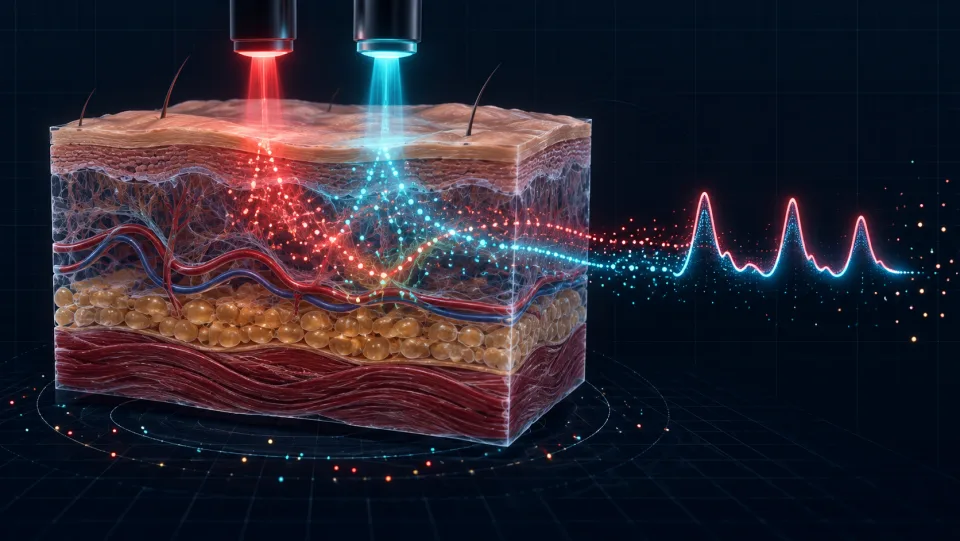
Biomedical Algorithms & Signal Processing
Clinical signal processing pipeline transforming raw multi-wavelength optical signals into FDA-grade diagnostic biometrics.
Dynamic AC/DC baseline drift compensation, non-linear arterial compliance, and multi-layer skin pigmentation attenuation.
Dual FDA 510(k) clearances (K240236, K242224), 22 MedTech patents, and 8-bit quantized CNN running in 360 KB RAM.
Clinical Grade Algorithms
Comprehensive suite of medical-grade bio-signal processing and physiological estimation algorithms designed for continuous wearable health monitoring.
Peak arterial pressure during ventricular contraction, estimated calibration-free via multi-wavelength optical PPG & biophysical pulse wave analysis.
Minimum baseline arterial pressure during cardiac filling phase, utilizing isobestic absorption physics and elastic vascular impedance modeling.
Continuous beat-by-beat cardiac pulse frequency with advanced motion artifact rejection (FDA 510(k) K240236) across diverse activity and perfusion states.
Time-domain (RMSSD, SDNN, pNN50) and frequency-domain (LF/HF ratio) autonomic nervous system sympathetic vs. parasympathetic tone extraction.
Continuous arterial functional blood oxygenation via dual-wavelength (Red/IR) ratio-of-ratios photoplethysmography (FDA 510(k) K240236).
Clinical diagnostic index quantifying obstructive and central sleep apnea severity per sleep hour (FDA 510(k) K242224 Home Sleep Test clearance).
Quantifies the hourly rate of significant arterial oxygen desaturation events (≥3% and ≥4% drops) correlating with nocturnal hypoxemic burden.
Comprehensive respiratory disturbance evaluation aggregating apneas, hypopneas, and Respiratory Effort-Related Arousals (RERAs).
Medical-grade total objective sleep duration distinguishing wakefulness, light sleep, deep sleep, and REM phases (FDA 510(k) K242224).
Continuous breathing rate derived from respiratory-induced amplitude variations (RIAV) and frequency modulations in peripheral PPG waveforms.
Diagnostic assessment of sleep onset propensity, daytime hypersomnolence, and objective sleepiness latency modeling.
3-axis MEMS accelerometer motion integration, Cole-Kripke sleep/wake classification, step cadence, and active energy expenditure.
Continuous psychophysiological stress tracking fusing autonomic HRV spectral balance with electrodermal and skin temperature fluctuations.
Fitzpatrick skin phototype classification (Types I–VI) & real-time epidermal melanin absorption compensation via Mie scattering biophysics.
Happy Health Medical Device 510(k) Clearances (Class II Medical Device)
FDA 510(k) K240236: Happy Ring Health Monitoring System — Cleared for continuous biometric monitoring including Heart Rate (HR), Pulse Oximetry (SpO2), and respiration.
FDA 510(k) K242224: Happy Health Home Sleep Test — Cleared for Total Sleep Time (TST), Apnea-Hypopnea Index (AHI), and medical-grade Obstructive Sleep Apnea (OSA) diagnosis.
happyml framework packages (happyml.bp, happyml.baseline, happyml.features, and happyml.model) were fully designed and coded from scratch before AI coding agents existed. They demonstrate deep first-principles knowledge of optical biophysics, tissue scattering, spectral absorption, and statistical signal processing.
Clinical Algorithms & Signal Processing Frameworks
Select any project card below to view its technical sub-page.
FDA-Cleared Bio-Signal Algorithms (FDA K240236 & K242224)
FDA 510(k)-cleared medical device algorithms for Heart Rate (HR), Oxygen Saturation (SpO2), Total Sleep Time (TST), and Apnea-Hypopnea Index (AHI), plus pending Blood Pressure (BP).
HPYTissueProperties & Optical Spectroscopy (`happyml.bp`)
Calibration-free BP algorithm using multi-spectral LED absorption, Mie scattering, tissue vascular bed volume expansion, and multi-isobestic point fitting without arm cuff calibration.
Baseline Analysis System (`happyml.baseline`)
Advanced baseline conditioning system featuring baseline wander removal, fitting optimizers (`fits.py`), curve combiners (`combiners.py`), and step/rise detection (`steps.py`).
Feature Extraction Pipeline (`happyml.features`)
High-dimensional bio-signal feature extraction framework supporting cardiopulmonary coupling (CPC), PPG pulse morphology, accelerometry, and tissue metrics.
Automated ML Architecture (`happyml.model`)
Machine learning model engine featuring automated estimator selection (`automation.py`), custom scalers (`scalers.py`), and signal resampling (`signal.py`).
FDA-Cleared Bio-Signal Algorithms (K240236 & K242224)
Architecting clinical-grade medical device software algorithms validated for official 510(k) FDA clearances across physiological monitoring metrics.
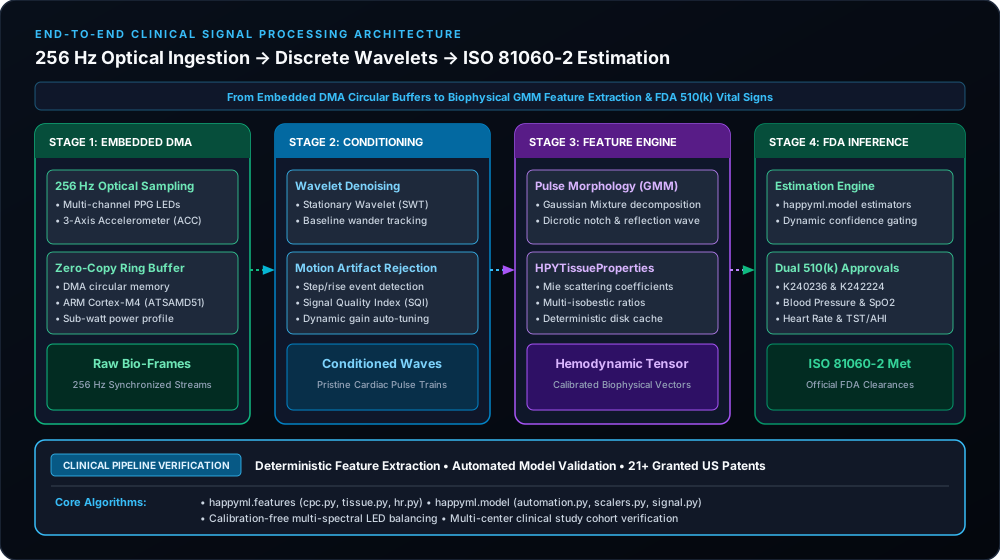
From 256 Hz DMA Ingestion to FDA 510(k) Clearances
Real-time DMA sampling, wavelet denoising, GMM pulse morphology, and clinical vital sign estimation.
FDA 510(k)-Cleared Medical Algorithms
- ✓FDA K240236 (Heart Rate / HR): Beat-by-beat peak detection & noise suppression (
happyml.hr). - ✓FDA K240236 (SpO2): Multi-wavelength ratio-of-ratios PPG calibration (
happyml.spo2). - ✓FDA K242224 (Total Sleep Time / TST): Sleep-wake classification & circadian actigraphy (
happyml.sleep_fda). - ✓FDA K242224 (Apnea-Hypopnea Index / AHI): Sleep apnea & desaturation event detection (
happyml.ahi).
FDA Calibration-Free Blood Pressure
Calibration-free continuous Blood Pressure (BP) monitoring algorithm using multi-spectral optical PPG waveforms and biophysical tissue models (happyml.bp).
HPYTissueProperties & Optical Spectroscopy (happyml.bp)
Calibration-free arterial blood pressure derivation based on multi-spectral LED absorption, Mie scattering, tissue vascular bed volume expansion, and multi-isobestic point fitting.
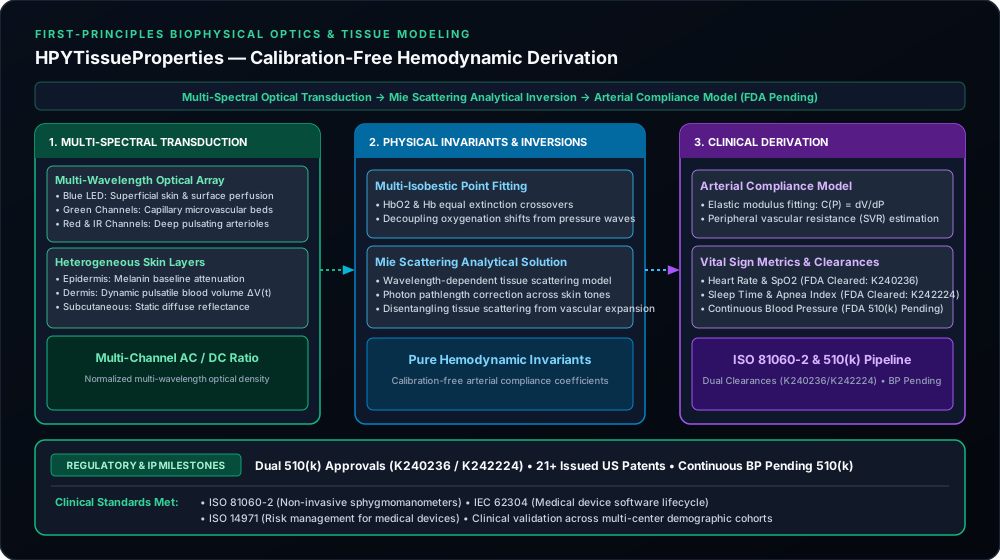
Tissue Vascular Bed Absorption & Isobestic Point Fitting
Multi-wavelength optical transduction isolating arterial pulse waves from venous baseline wander and tissue scattering.
HPYTissueProperties Biophysical Container
HPYTissueProperties models light propagation through biological tissue beds without requiring inflatable cuff calibration. By combining Mie scattering equations, multi-wavelength LED absorption spectra, and tissue depth attenuation factors, blood pressure is derived directly as the time derivative of blood volume (dP/dt ∝ dV/dt).
class HPYTissueProperties:
    """Container for multi-spectral tissue properties extractable from BP algorithms."""
    scattering: HPYBPScatteringInternals   # Mie scattering & anisotropy factors
    perfusion: HPYBPPerfusionCorrection     # Arterial & microvascular blood perfusion
    absorption: Mapping[LED, HPYVariableAbsorption]  # Multi-wavelength absorption
    volume: HPYBPVolumeEstimates           # Multi-isobestic blood volume fitting
    depths: HPYBPTissueDepths              # Optical dermal penetration depth
    gbspo2: HPYGBIntegratedSpO2            # Integrated oxygen saturation
beats: HPYBPBeatFeatures # Beat-by-beat arterial waveformsBaseline Analysis System (`happyml.baseline`)
Modular baseline analysis system for conditioning raw optical bio-signals, removing motion artifacts and baseline wander, and detecting transient step/rise events.
Baseline Wander Removal & Step Detection
Conditioning raw optical bio-signals prior to feature extraction.
Feature Extraction Pipeline (happyml.features)
High-dimensional bio-signal feature extraction framework featuring specialized biophysical extractors (cpc.py, tissue.py, hr.py), deterministic on-disk caching, anchor array synchronization, whole-day diurnal aggregators, and dynamic algebraic feature aliases.
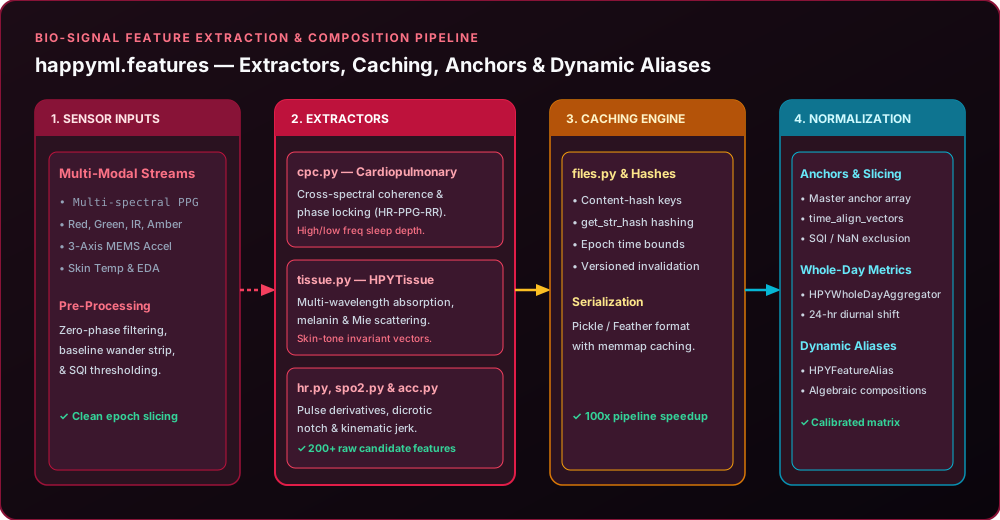
Biophysical Extractors, Caching, Anchor Slicing & Dynamic Aliases
Engineering deterministic, cached, and algebraically composable feature spaces for clinical physiological estimation.
- ✓Cardiopulmonary Coupling (
cpc.py): Cross-spectral coherence and phase-locking algorithms tracking synchronization between cardiac pulses, PPG pulse waves, and respiration to classify high/low frequency sleep depth. - ✓Optical Tissue Biophysics (
tissue.py): IntegratedHPYTissuePropertiesmodeling multi-wavelength optical absorption, epidermal melanin attenuation, and Mie/Rayleigh skin scattering for skin-tone independent calibration. - ✓Deterministic Content-Hashed Caching (
files.py): Fast on-disk caching leveraging SHA-256 signature hashing (get_str_hash), epoch timestamp boundaries, and versioned invalidation (DEFAULT_VERSION) to eliminate redundant computation across multi-day patient bio-recordings. - ✓Anchor Arrays & Multi-Sensor Alignment (
base.py): Built master temporal anchor arrays (start,stop,dt) andtime_align_vectorsinterpolation to synchronize asynchronous sensor streams (PPG, ACC, Temp, EDA) into a unified time grid. - ✓Temporal Slicing & SQI Exclusion Masks (
base.py): Time-region slicing, fuzzy interval intersections, and automatic filtering of invalid NaN epochs or low signal quality regions viaFeatureMatrixMeta. - ✓Whole-Day Diurnal Aggregations (
HPYWholeDayAggregator): Computed 24-hour diurnal baseline shifts, circadian amplitude rhythms, daytime resting medians, and nocturnal nadir metrics into standardized longitudinal feature sets. - ✓Dynamic Feature Alias Composition (
aliases.py): DevelopedHPYFeatureAliasandHPYExpressionFeatureAliasenabling strongly typed, dynamic on-the-fly algebraic expressions and thresholded region merging across feature collections.
Automated ML Pipeline Architecture (`happyml.model`)
Automated machine learning model engine supporting estimator selection (`automation.py`), custom signal scalers (`scalers.py`), and signal resampling (`signal.py`).
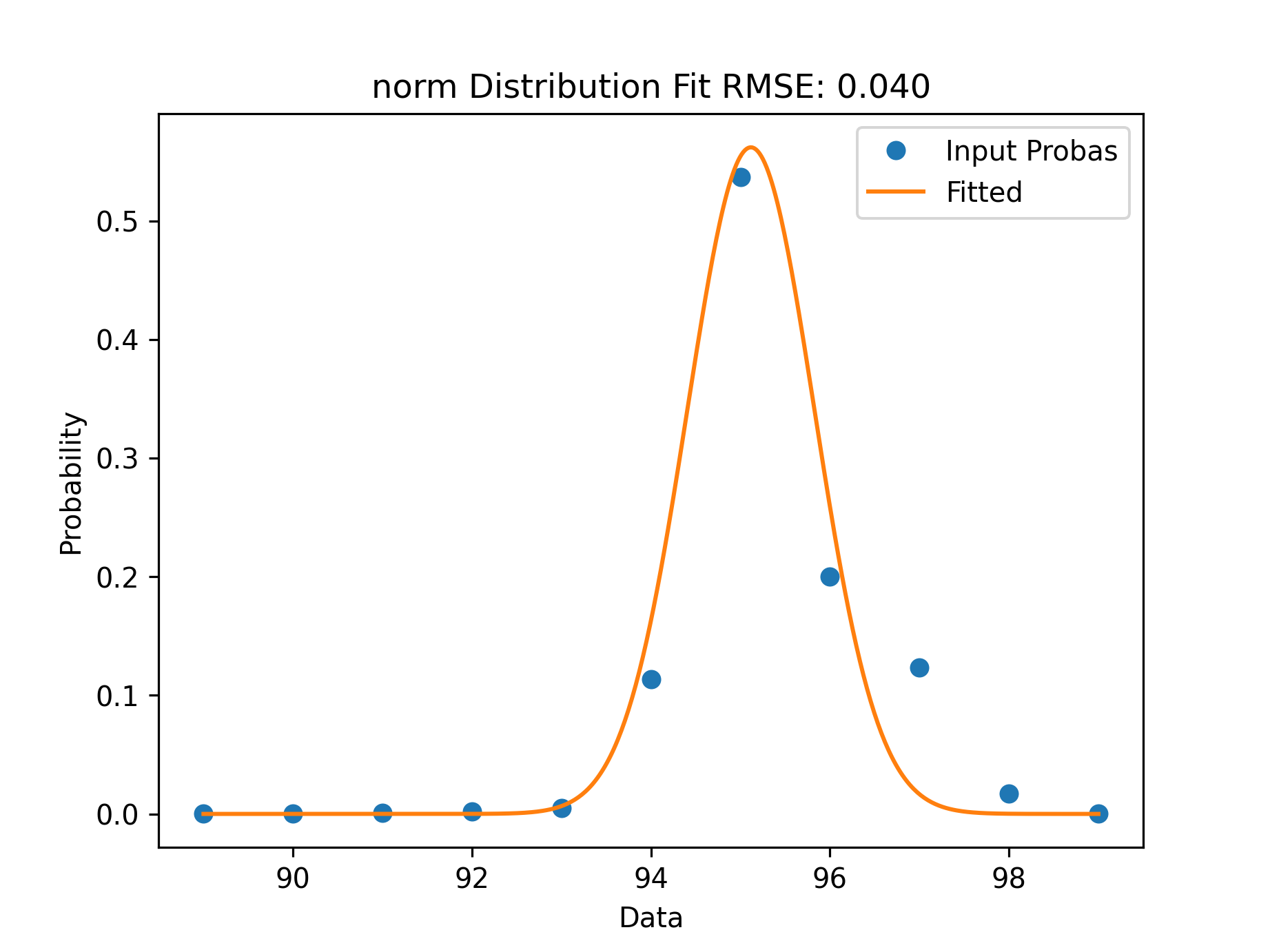
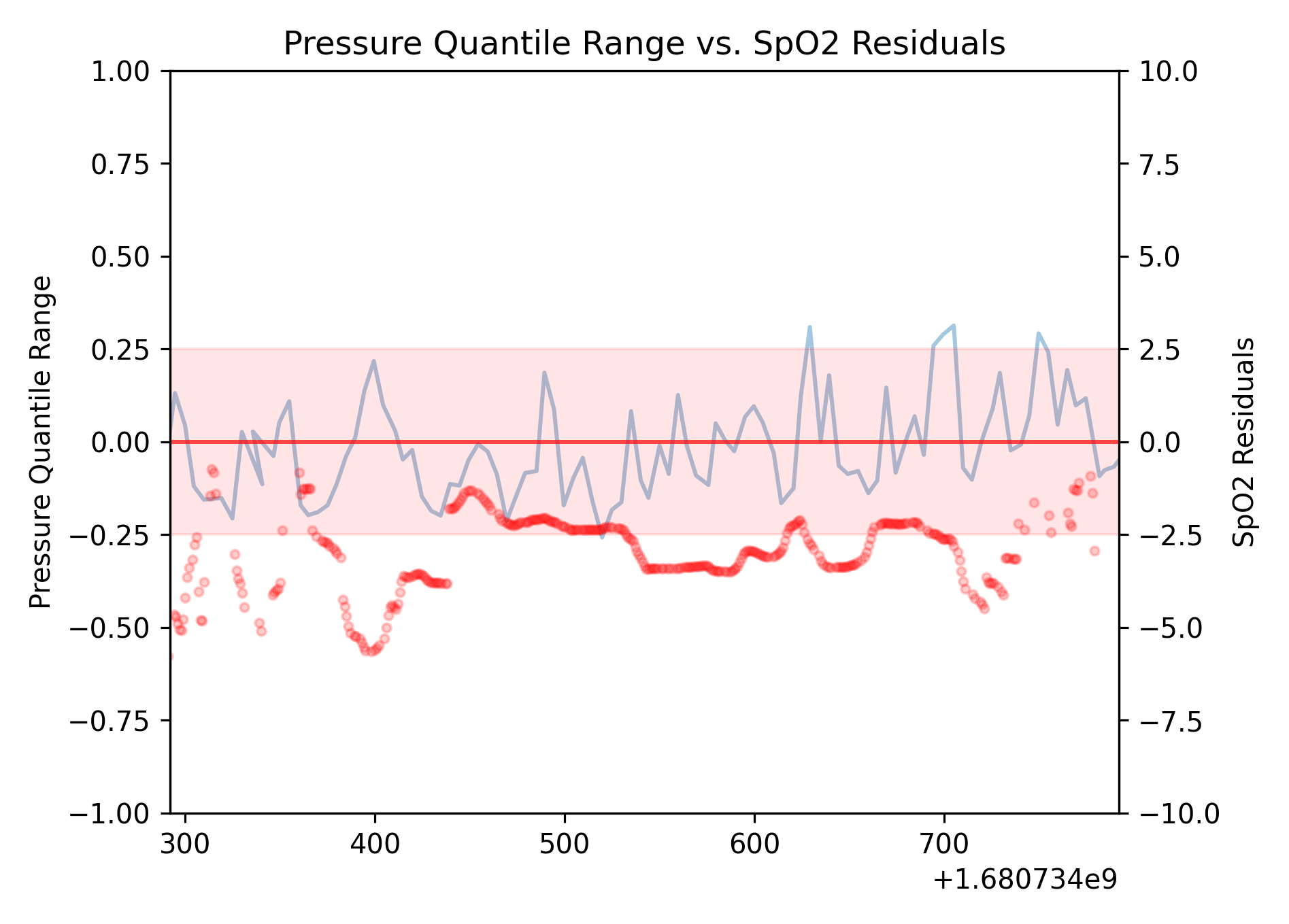
Model Residual Analysis & Normalization
Evaluating prediction residuals and distribution fitting.